Four Books That Shaped My Leadership Philosophy
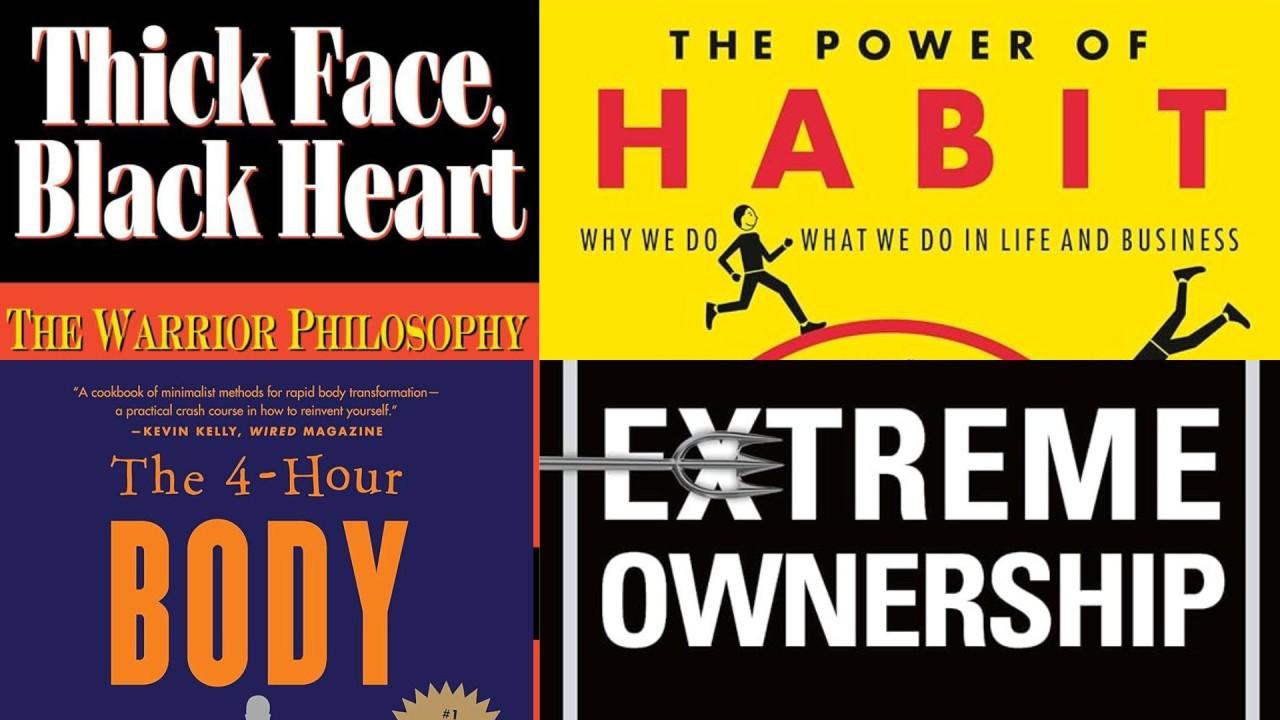
Over twenty years of building teams and leading companies, certain books hit you at exactly the right moment. They don’t just inform — they rewire how you see leadership entirely.
These four books shaped my approach to leadership more than any MBA program or consulting framework ever could. Each came at a different stage of my journey, from founding my first company to scaling through acquisition to navigating private equity transitions.
Here’s how each one changed my thinking — and why they’re still on my shelf today.
”Thick Face, Black Heart” by Chin-Ning Chu
When I read it: 2005, early days of building Mailigen
What it taught me: Ruthless compassion in decision-making
This book arrived when I was 22 and struggling with the hardest part of early leadership: making decisions that hurt people you care about. Firing someone. Cutting a product line. Saying no to a client who’s been with you from the start.
Chu’s concept of “thick face, black heart” isn’t about being heartless. It’s about developing the emotional resilience to make necessary decisions without letting sentiment override judgment. The “thick face” is immunity to criticism when you know you’re right. The “black heart” is the willingness to endure short-term unpopularity for long-term benefit.
How it changed my leadership:
At Mailigen, I had to fire our first support hire — a friend who helped us get started but couldn’t grow with the company. Old me would have delayed for months, hoping things would improve. “Thick face, black heart” me had the conversation within a week. It was the right call for everyone.
Later, during the Pipedrive acquisition, when teams were being restructured and people were scared, this philosophy kept me focused on what was best for the 700 people in the company, not just the vocal few who resisted change.
For leaders scaling teams: You will face moments where being liked and being effective are in direct conflict. Choose effective. Your team needs a leader who makes hard calls, not a friend who avoids them.
”The Power of Habit” by Charles Duhigg
When I read it: 2013, Mailigen growing from 15 to 30 people
What it taught me: Systems create culture, not intentions
This book hit me right when Mailigen was hitting the dreaded “teenage phase” — too big for everyone to know everyone, too small for formal processes. Things that worked at 15 people were breaking at 25.
Duhigg’s insight about organizational habits was a revelation: every company develops habits (he calls them “routines”), and these habits determine whether you scale smoothly or chaotically. The habits happen anyway — you either design them intentionally or let them form randomly.
How it changed my leadership:
I stopped trying to “fix” people and started designing better systems. Instead of telling people to “communicate better,” I built weekly cross-team standups. Instead of hoping engineers would write documentation, I made it part of the pull request template.
At Pipedrive, when we were integrating teams post-acquisition, I focused on identifying which habits were worth preserving and which needed to change. The successful integrations happened where we were intentional about habit formation. The messy ones happened where we assumed good intentions would be enough.
For leaders scaling teams: Culture isn’t what you say in all-hands meetings. It’s the habits your team repeats every day. Design those habits deliberately, or they’ll design themselves accidentally.
”The 4-Hour Body” by Tim Ferriss
When I read it: 2011, burning out as CEO
What it taught me: Minimum effective dose applies to everything
This seems like an odd choice for a leadership book list, but hear me out. Ferriss’s concept of “minimum effective dose” — the smallest input that produces the desired output — fundamentally changed how I think about effort and results.
I was working 70-hour weeks and proud of it, until I realized I was getting diminishing returns on everything past hour 50. The extra 20 hours weren’t making me a better leader — they were making me a worse one.
How it changed my leadership:
I started applying minimum effective dose to meetings (what’s the smallest meeting that gets to a decision?), to processes (what’s the simplest system that solves the problem?), and to my own involvement (what’s the minimum input from me that unblocks the team?).
During the private equity transition at Pipedrive, this thinking saved me from micromanaging every detail. I focused on the few decisions that only I could make and trusted the team with everything else. Counterintuitively, less involvement led to better outcomes.
For leaders scaling teams: Your job isn’t to work harder — it’s to work on the things that only you can do. Everything else should be delegated, automated, or eliminated.
”Extreme Ownership” by Jocko Willink
When I read it: 2018, during a particularly challenging quarter at Mailigen
What it taught me: Leadership is taking responsibility for outcomes, not assigning blame
I thought I understood accountability until I read this book. Willink’s military examples of extreme ownership — taking responsibility not just for your decisions but for every outcome in your sphere of influence — was a masterclass in leadership mindset.
The chapter on “No Bad Teams, Only Bad Leaders” hit especially hard. I was frustrated with a product team that seemed to keep missing deadlines and delivering subpar work. My first instinct was to blame the team. Extreme ownership forced me to ask: what am I doing as their leader that’s enabling these outcomes?
How it changed my leadership:
I stopped starting sentences with “My team didn’t…” and started with “I didn’t…” The team missing deadlines? I didn’t give them clear priorities. The product quality suffering? I didn’t establish clear standards. The communication breaking down? I didn’t create the right forums.
This shift from blame to ownership transformed how my teams responded to challenges. When your default is to take responsibility, your team starts taking responsibility too. When your default is to assign blame, they start making excuses.
For leaders scaling teams: Your teams will mirror your behavior. If you deflect responsibility, they will too. If you own outcomes completely, they’ll start owning their piece more completely.
The Common Thread
These four books share a common insight: leadership isn’t about personality or charisma — it’s about systems, habits, and mindset. You can develop all three deliberately.
- Thick Face, Black Heart taught me emotional resilience in decision-making
- The Power of Habit taught me systematic thinking about culture
- The 4-Hour Body taught me ruthless prioritization of effort
- Extreme Ownership taught me complete accountability for outcomes
Twenty years later, these principles still guide every leadership decision I make. From building Mailigen to scaling at Pipedrive to transforming teams at a robotics startup — the contexts change, but the fundamentals remain.
What’s On Your Shelf?
The books that shape your leadership philosophy say as much about you as your management style does. They’re the ideas you return to when things get difficult.
What books fundamentally changed how you think about leadership? Not the ones you read because you should, but the ones that rewired your brain when you needed it most.
Want more insights on building and scaling teams? Subscribe to The Operating Leader — weekly leadership lessons from the trenches of building companies.
📘 The Team Health Playbook — Diagnose, fix, and maintain healthy teams. 40+ diagnostic questions, 3 action playbooks, and a weekly pulse framework.
Get the Playbook →